Why does my Mexican rice turn out mushy?
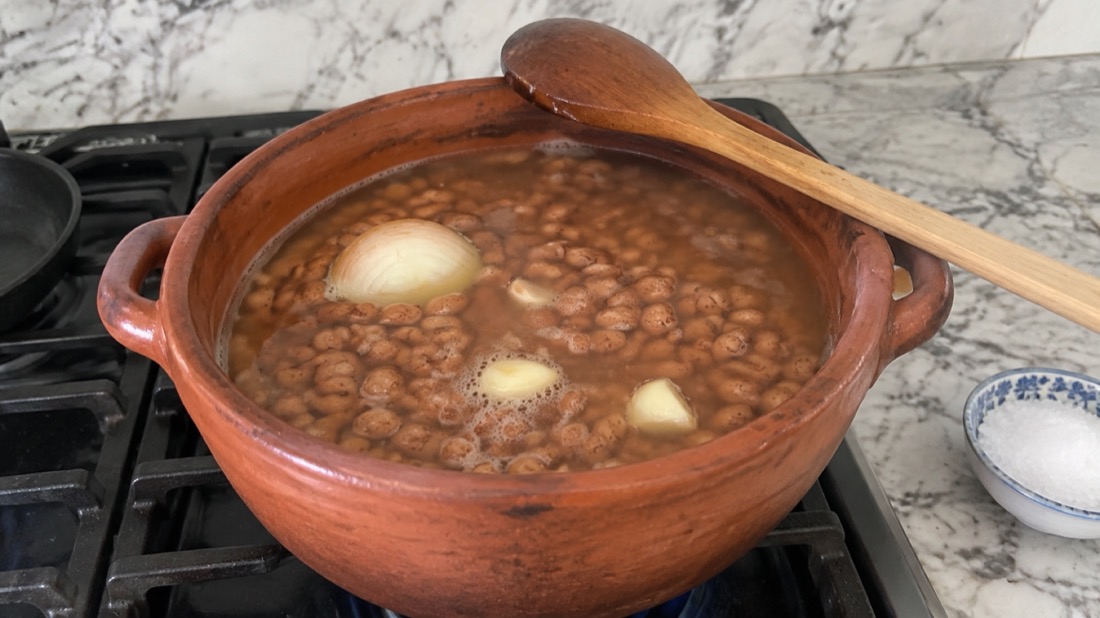
The old rule says never salt beans until the end. Salt makes the skins tough. Salt stops them from softening. Whole generations obeyed it, mine included.
If you have always salted at the end, you did exactly what you were told. It was handed down like an heirloom. And it is backwards.
What is really going on
Here I have to correct my own mother, which I do with respect, because she is the one who taught me to correct things that are wrong no matter who said them.
It has been tested side by side, many times, by cooks more patient than me. Beans salted from the beginning cook up seasoned all the way through, with skins as tender or tenderer. A bean that cooks without salt never really takes it in afterward. You get salty broth around bland beans.
What actually toughens a bean is acid. Tomatoes, lime, vinegar, chile sauces. Acid reinforces the structure of the bean and can hold it hard for hours, no matter how it boils. The old cooks saw pots fail, and salt was standing nearby, and salt got blamed for what the tomato did.
So salt goes in at the start, a proper spoonful. Acid waits until the beans are fully soft.
Will the pot end up too salty?
No. Beans do not reduce. A pot of beans finishes with about as much water as it started with, so salt added at the beginning is salt at the same concentration at the end.
The pot
For 1 pound of dried pinto or black beans, about 2 heaping cups, you need 1/2 a white onion in one piece, 3 whole peeled cloves of garlic, 1 generous tablespoon of manteca (lard) or a few tablespoons of neutral oil, and 1 tablespoon of salt to start.
- Pour the beans onto a tray, sort them with your fingers, then rinse them in a colander.
- Put them in your biggest pot and cover with water by 2 to 3 inches.
- Add the onion, the garlic, the manteca and the salt. Bring it to a boil, then drop it to a gentle simmer with the lid tilted.
- Simmer 1 1/2 to 3 hours unsoaked, roughly 1 to 2 hours soaked. Keep the beans covered by liquid, and when you top up, top up with hot water.
- In the last 30 minutes, taste the broth and a bean, and correct the salt.
- They are done when five beans in a row are creamy to the center. Turn off the fire and leave everything in the broth.
The broth should taste pleasantly like something from the beginning. And never pour it out. The broth is half the treasure.
When the tomato is welcome
After. For charro beans, the fried tomato, chile and pork go into the pot once the beans are already soft, and simmer 20 to 30 minutes. Now the acid can no longer harden anything. It can only brighten. Not never, just after.
And the soak
If you remembered the night before, soak. If you did not, cook them anyway and add an hour. There is no wrong door.
If it went wrong
- Hard, and you added tomato, chile sauce or anything sour early. That is the acid holding them. Next time acid waits for softness, always.
- Split and gone to mush. The boil was too violent, or they simply went too long. That is not a tragedy. It is refried beans a day early.
- Thin broth. It was under-salted, or there was too much water for the beans. Let the last half hour simmer with the lid off.
When this will not work. If the beans never softened after four hours, stop blaming yourself, and stop blaming the salt. You almost certainly bought old beans. The only cure is a pressure cooker, or a new bag from a store that sells a lot of beans.
Salt from the start, acid at the end, and never throw away the broth.

Bertha's Cookbook
- 551 pages, 120+ recipes with the exact measures.
- Instant PDF, any device
- 7-day money back